Language
  EN
EN RU
RU ES
ES DE
DE EL
EL IT
IT JA
JA KO
KO PT
PT ID
ID SR
SR UK
UK VI
VI TH
TH TR
TR MS
MS BE
BE AR
ARHow to Choose the Right Tire Retreading Equipment: A 5-Step Buyer’s Guide
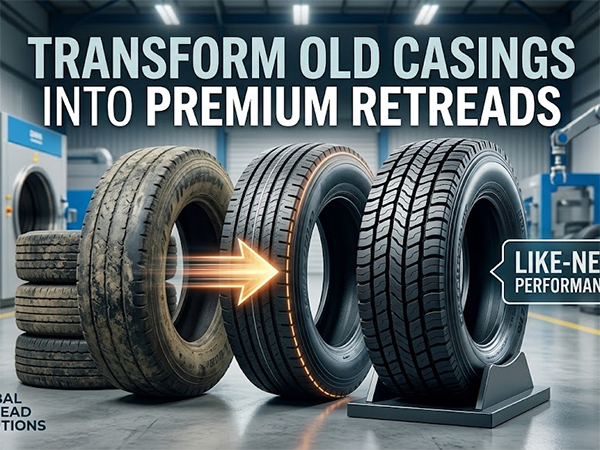
Choosing the ideal tire retreading equipment is a critical decision that directly impacts your production efficiency, product safety, and long-term profitability. Balancing production needs with budget and compliance is no easy task—poor selection can lead to safety risks, inconsistent tire quality, and costly downtime.
To help you make an informed investment, we have outlined the five most critical factors for selecting professional retreading machinery.
1. Align with Your Production Scale & Targets
Before browsing models, define your daily output and the specific tire types you intend to service.
• Small-Scale (10–20 tires/day): Focus on semi-automatic lines. This typically includes a manual buffing machine, a small curing tank, and a basic pressing machine. This is the most cost-effective entry point for regional fleets or small recycling centers.
• Medium-Scale (50–100 tires/day): Opt for semi-automated lines. These systems integrate CNC buffing machines and PLC-controlled curing tanks. This setup is ideal for established factories handling a diverse range of tire brands.
• Large-Scale (100+ tires/day): Require fully automated lines. These high-capacity systems feature robotic handling and advanced inspection tools like laser profiling or X-ray. This is the gold standard for professional retreading plants.
2. Evaluate Performance and Engineering Reliability
Tire retreading involves high pressure and extreme heat; your equipment must be built to last.
• Build Quality: Look for heavy-duty steel frames. Precision components like motors and seals must be high-grade to resist vibration. Poor surface treatments or weak welding are red flags for future breakdowns.
• Precision & Consistency: High-quality retreads require strict tolerance levels. Ensure your machinery can maintain temperature accuracy within ±1°C and pressure within ±0.5MPa.
• Energy Efficiency: Operating costs can eat your margins. Prioritize equipment with insulated curing chambers and heat recovery systems to reduce electricity and steam consumption.
3. Prioritize Compliance & Safety Certifications
In many regions, operating uncertified curing tanks or high-pressure machinery is illegal and dangerous.
• International Standards: Ensure your supplier carries CE (Europe), ISO 9001, or local marks like UL (North America) or SABS (Africa). These are essential for market access and insurance purposes.
• Operator Safety: High-end equipment should include emergency stops, safety guards, and full compatibility with Lockout/Tagout (LOTO) procedures.
4. Insist on Robust After-Sales Support
The true cost of a machine includes its maintenance over 10 years.
• Spare Parts: Can the supplier ship critical components globally within 48 hours? Minimize your downtime by choosing a partner with a strong logistics network.
• Training: On-site installation and operator training are non-negotiable. Your team needs to know how to calibrate and lubricate the machines to prevent wear.
• Warranty: Look for a 12–24 month warranty on core components as a sign of the manufacturer's confidence in their product.
5. Understanding Your Budget Considerations
While prices vary by region, here is a general breakdown of the investment required:
| Tier | Estimated Investment | Best For |
| Entry-Level | $15,000 – $35,000 | Small-scale startups & regional fleets |
| Mid-Range | $35,000 – $80,000 | Growing regional factories |
| High-End | $80,000 – $150,000+ | Industrial-scale operations |
Expert Tip: Never sacrifice safety for a lower price tag. Avoid low-cost curing tanks that lack pressure vessel certifications—the long-term risks far outweigh the initial savings.
Conclusion
Investing in tire retreading equipment is an investment in the future of sustainable transportation. By focusing on scale, precision, and safety certifications, you can build a retreading facility that delivers high-quality tires and a strong return on investment.
Ready to start your retreading journey? Contact our technical team today for a customized equipment proposal.
GET IN TOUCH
- Call Now+86-18866769106
- Chat Now+86-18866769106
- Mail Nowpangxuemei_cn@outlook.com
- AddressNo.156 Donghuan Road,Zhucheng City,Shandong Province,China.